
Why a matching tube diameter is not enough
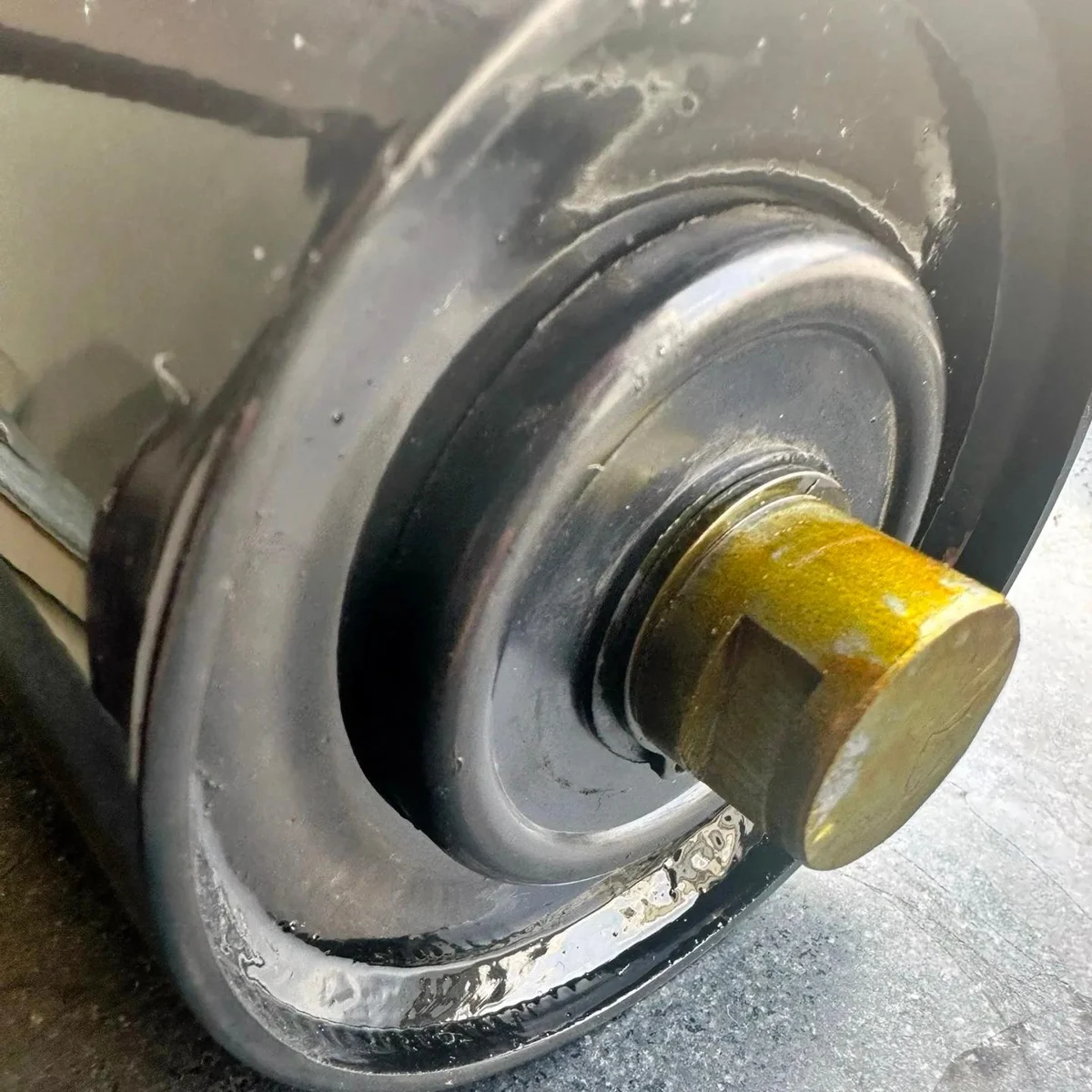
A replacement roller must fit its support arrangement as well as suit its operating duty. Two rollers with similar tubes can have different shaft projections or end features. The photograph on this page illustrates one end arrangement; it is not a universal shaft specification. Keep the assembly drawing as the reference for the actual order.
Label the different lengths
Identify the tube length, overall end-to-end dimension and mounting length on a sketch or drawing. Draw the extension lines so the reader can see exactly where each measurement begins and ends. If your manual uses a symbol such as L2, keep that symbol and its definition from the actual drawing. Do not silently substitute overall length for a manual reference dimension.
Document both shaft ends
Supply a clear end view and a side view for each end. Show any flats, slots, threads, holes, retaining features and shaft projection that affect mounting. Do not assume both ends are identical. Include dimensions and tolerances from the approved design rather than estimating them from a photograph. A damaged feature should be identified as damaged, not copied as the intended geometry.
Include the frame and installed position
With the equipment safely isolated under your maintenance procedure, record the support opening and mounting arrangement when appropriate. A frame photograph can help explain the location; the drawing confirms the fit. State whether the roller is used on the carrying run, the return run or another duty. Include belt speed, material and loading conditions for application review; shaft dimensions alone do not establish a load rating.
Keep bearing and seal requirements visible
List the specified bearing reference and agreed sealing arrangement separately from tube and shaft dimensions. State environmental requirements, such as dust, moisture or cleaning conditions, without assuming that an outside appearance proves a protection level. Ask for confirmation of the supplied configuration and inspection scope against the drawing.
Send one controlled replacement record
Before requesting a quote, collect the roller drawing revision, both shaft-end details, defined lengths, tube diameter, bearing and seal requirements, position and quantity. Identify whether the frame is included in supply. For a non-standard assembly, use the custom roller page. The roller inquiry checklist covers the remaining operating and delivery details.